Es habitual que los desfibriladores se cataloguen como desfibriladores de «alta energía»; sin embargo, es más preciso decir que la corriente eléctrica es la responsable de generar la descarga que restablecerá el ritmo normal del corazón. La forma de onda de alta corriente Rectilinear Biphasic™ (RBW) de ZOLL® proporciona más corriente que cualquier otro desfibrilador bifásico disponible en el mercado actual, incluso más que aquellos catalogados como desfibriladores de «alta energía». Esta capacidad es especialmente importante para los pacientes con alta impedancia, difíciles de desfibrilar. La RBW de ZOLL cuenta con 200 julios y aplica más corriente promedio a los pacientes con alta impedancia que cualquier otra forma de onda bifásica.
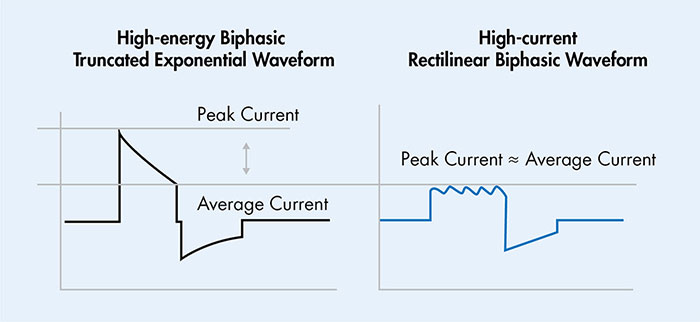
Recuerde que la RBW de ZOLL se parece a la forma de onda bifásica truncada en pacientes con alta impedancia.